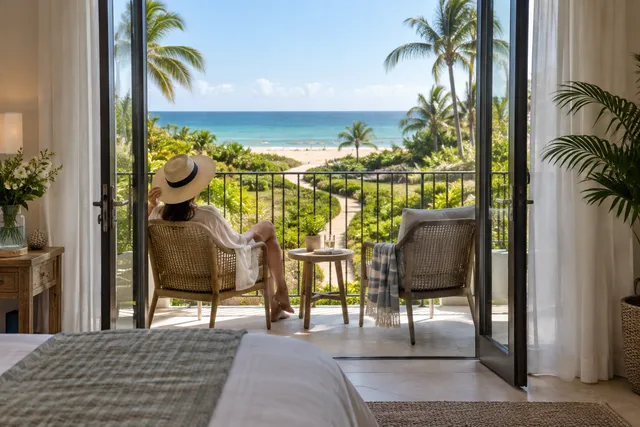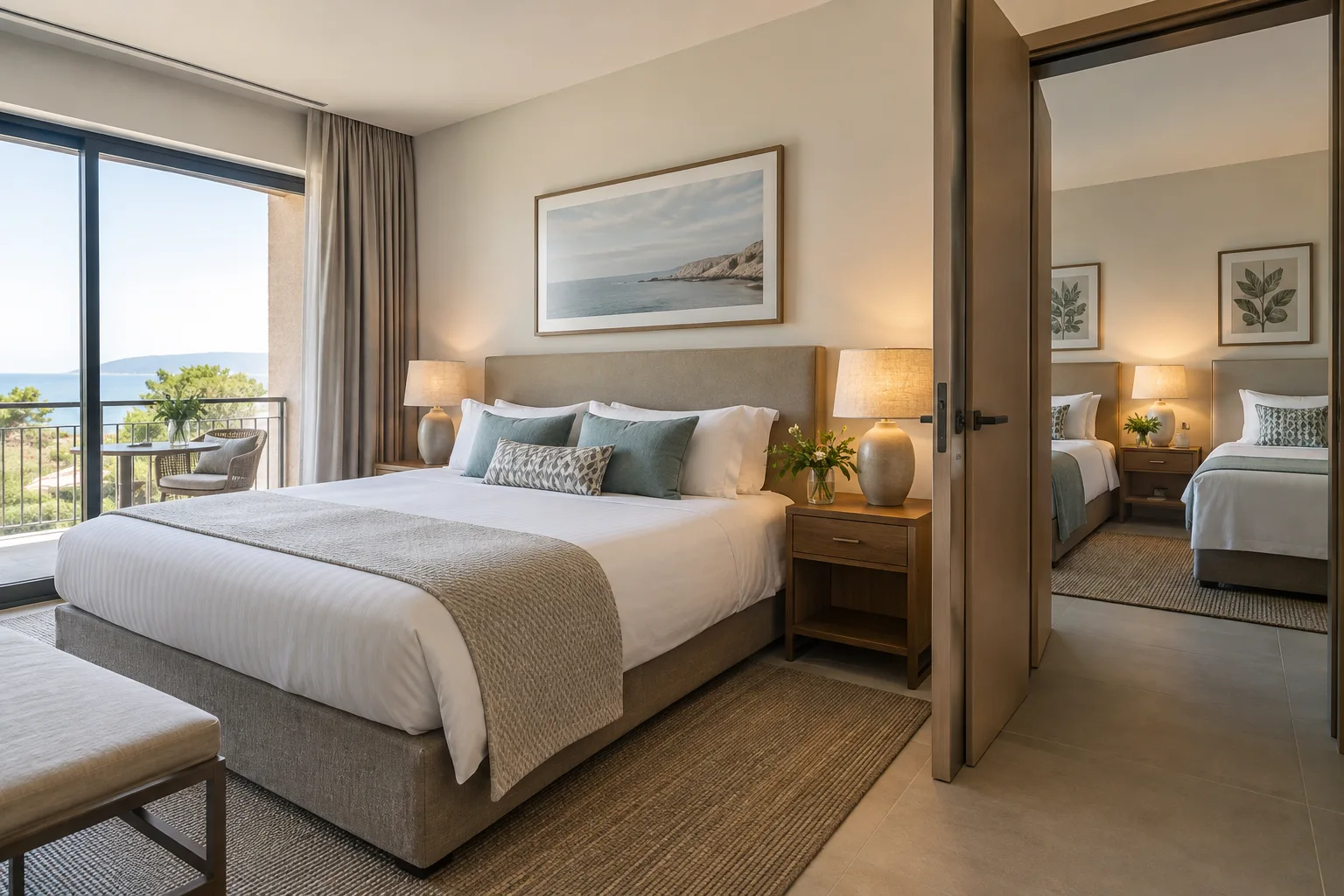
A picture of a large room does not answer the question of how the family will sleep in it. In choosing a room, you need to look into three separate things: who is allowed to stay on the offer, what beds you get, and how the space is divided. Two suggestions that seem to fit the same vehicle can offer a very different evening experience.
Start by describing your use of the room. Do they all go to bed at the same time? Does anyone need a table or a quiet corner in the evening? Do you want two bathrooms? Such questions are more useful than assuming that a room in my family name would necessarily be more comfortable than a large room or two rooms. The trade name alone does not provide the answers.
In a family room, ask to understand if there is a separate bedroom with a door, an open area, or a partition. Check what each bed is: a regular bed, a sofa bed, a bunk bed, or an extra bed. Also write the exact ages of the children at the time of their stay. The vehicle that has been entered otherwise may produce another offer, so it is important to compare with the same details on each site.
In connected rooms, the first question is whether it is an inner door between the two rooms. Nearby rooms in the corridor do not solve it in need. Then check to see if the connection is included in the room type you order, or recorded only as a request. For example, Hilton operates a dedicated route for approving connected rooms through certain booking channels; this does not imply that an order through another provider receives the same certificate. Official information from Hilton.
| What is checked | Family Room | Two rooms connected. |
|---|---|---|
| Privacy in the evening | Is there an interior door or just a shared space? | Has the connection door been approved by invitation? |
| Beds | What does each passenger get? | What type of bed is in each room? |
| Bathing | How many bathrooms? | Does each room have its own bathroom? |
| The vehicle | What is the approved occupancy? | How are the passengers registered in each room? |
| Price | Full price for all stayers | The price of both rooms and all toilets |
Do not assume that a price displayed next to a connected room includes both rooms. TUI makes it clear that the booking route it describes should be booked and paid for for in both rooms. This is an example of the need to read your supplier's pricing unit. TUI explanation on booking connected rooms. Before payment check the final amount, the number of rooms and passengers in each room.
To see the difference, imagine two families in the same vehicle. Everyone first hangs out together and falls asleep at about the same time. In the second, the children fall asleep early and the adults want to keep reading and talking. This is an illustration of use needs, not a hotel recommendation: the second family door between areas may be more significant than a few more meters in an open room.
Ask for a room plan or pictures of the exact category. A general set of photos of the hotel can involve different rooms. If there is no plan, it is possible to send to provide a short list: number of enclosed spaces, bed types, number of bathrooms, connecting door and whether the required individual is approved. Keep the answer next to the category name, so you know what proposition it refers to.
Finally, define one or two threshold conditions. For example: you must separate with a door; or it is important that each child gets a separate bed. In this way you can disqualify an offer that is unsuitable before comparing design, scenery and pools. The right room is the one that supports your family routine, and the detailed check gives the price a meaning that can be compared.
Try the room imaginatively before inviting it
A room plan becomes useful when passing through everyday activities. Imagine an entrance with all the luggage, the opening of the extra beds and access to the bathroom after the children have fallen asleep. A space that appears to be free in the picture can be used at night for a bed opening. Ask to understand what the category looks like when it is arranged for your grab, and not just in photo mode.
Check where a cart, shoes and wet clothes are placed without blocking the passage. If there is a small table, ask if it remains accessible after opening the sofa. There is no need to require a detailed architectural plan, but you need to know that space is suitable for the uses for which you chose it.
In connected rooms, go over the morning routine: who uses which bathroom, where the common equipment is and how to get into each room. Check the mode of passenger registration and the occupancy conditions in front of the supplier. Do not draw from the inside door that can be registered to any vehicle you want or there are no restrictions on the category.
Write down one request that addresses the need and not just a trade name. For example, it is important that a door can be closed between the children's sleeping space and an area where adults can sit. Doubt can then explain whether the proposal meets the need or suggest another category. An answer that relates only to the size of the room still does not solve the separation question.
Activities discussed in this guide
Once you have chosen a room, plan how your family will spend time outside the hotel. Paphos waterpark and Prague Zoo are destination-specific examples. Compare the whole-family total, rest breaks and stroller access. These are activity tickets, not room bookings.
Affiliate links: we may earn a commission at no extra cost to you. Booking and payment take place on Viator. Check dates, terms and the final total.
Example scenario: Check the selection before committing
A family compares a large room with a sofa to two smaller spaces with a door. On the first day everyone gets along well in both, but one evening the children want to sleep early. Chart the entry, bathing and seating routes of the rest of the family. If you have to go through the sleeping area in each action, the benefit of size may be less important. The exercise does not determine which room is better, but rather reveals the compromise you are buying.
Work Questions and Practical Answers
| Decision Point | What to ask | How to Advance |
|---|---|---|
| Night mode | What changes in space when the couch or extra beds are open? | Ask to see or understand the arrangement in full occupancy. A bed that only opens in the evening may occupy space that was used in the room image for the passage or sitting. |
| Way to the bathroom | Is it possible to pass without crossing a sleeping space that needs to be quiet? | Describe who got up first and who fell asleep early and checked the way between them. Sleep separation is beneficial when normal actions do not cancel it out each time. |
| Place for Equipment | Where are the luggage and the cart without blocking traffic? | Set aside space for the suitcases and items used every day. If there is not enough information, ask the hotel about the particular room instead of inferring from another sample room. |
| Separation Authorization | In which document does the number of spaces and the door match the invitation? | Keep the category name and the answer that relates to the door and composition. A request registered without permission should not appear to you as if it were a guaranteed part of the room. |
A worksheet that leaves the differences visible
Open two columns with the names of the offerings, and copy each room type, passenger vehicle, and accommodation base. Don't sum it up yet who's better. Next to each feature write whether it is part of the order, a request made or a detail still missing. The separation prevents a beautiful image or general conversation from becoming a promise that has not been given to you.
Choose three actions you will do almost every day and pass them through each offer. Think about going out of the room, having a meal, rest and rehearsal in the evening according to your style. For each action, specify what is convenient and what requires additional planning. The goal is not to give a professional score to the hotel but to check how it serves your personal stay.
Only then add the total price and necessary additions. If a more expensive offer solves significant difficulty, write specifically about what convenience is paid. If you choose the cheaper offer, write down the settlement you received. Keep the comparison with the category details and test date, and return to the summary screen before payment to make sure the product has not changed.