In three days in Prague it is worth dividing the trip into areas and deciding in advance on one major internal visit each day. You can see a building from the outside, sit in the square and enjoy the road even without buying an entrance at each stop. The route here is a three-day offer that is useful; the order must be matched to the opening hours, tickets, and walking conditions on your dates.
The first day is dedicated to the Old City. Start at the Old Town Square and its surroundings, and gradually continue towards Jozefov. If you are interested in Jewish heritage, dedicate a real window of time to it and check which card covers which sites and on which days. If you prefer a general introduction, choose one tour or independent walk with a small number of points. There is no need to try to cram the two options together.
In the square look for the astronomical clock on the old town hall. It combines dials, astronomical information, and moving figures; the procession of the Twelve Apostles is only part of the mechanism. It is also worth looking at the bottom panel and side figures, and not leaving immediately after the movement in the windows. If you choose to visit the municipality, the tower and historic spaces offer different experiences: an observation of the city versus an introduction to the Romanesque and Gothic halls and cellars. Check the type of ticket according to what interests you.
In Josefov, the Pinkas Synagogue is a choice for a visit dedicated to memory. On its walls are the names of Holocaust victims from Bohemia and Moravia, and on the top floor are paintings of children from the Terezin ghetto. It's a stop that deserves to be given time and attention. If traveling with children, choose in advance how to explain the place and leave a break, instead of immediately moving to another site.
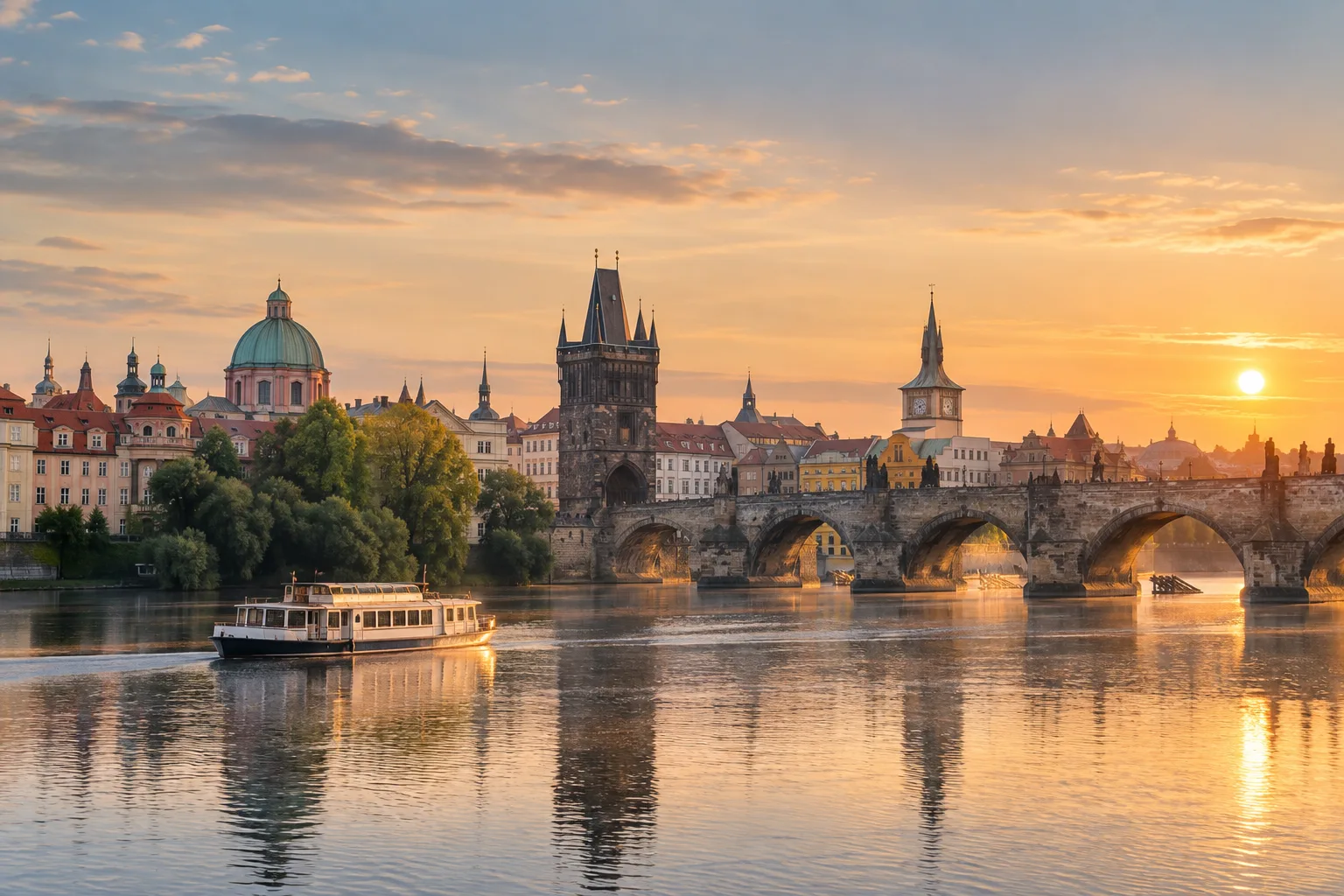
On the second day, the Prague Castle area was connected to Mala Strana and Kampa. We first planned how to get to the starting point and what the road includes in terms of ups and downs. Decide which parts of the fortress complex are important to you, leaving time for a gradual exit towards the borough below. Crossing the Charles Bridge can be integrated on this day or the first day depending on the location of the hotel; it is not necessary to return to it just to maintain a written route.
In the citadel complex one can focus the visit to St. Vitus Cathedral, a prominent landmark in Prague's skyline. Later, the descent to Male Strana replaces the royal complex's scale with the streets and squares of the borough. In Kampa you can continue to the art museum that bears the name of the area, if you want another internal visit; otherwise, leave time for a walk by the river and a look back at the bridge.
On the third day, they chose between two versions. In the urban version, the Wenceslas Square is combined with a single cultural visit and a walk towards the river. In the slow version, return to the area you love, choose a coffee shop, and take time to roam. Those who want green can choose a park suitable for its location and conditions on the same day, after checking the arrival route. There is no obligation to turn the last day into a busy "perfection" day.
| Day | The Central Area | Decisions to be made | Shorter if there is less time |
|---|---|---|---|
| 1 | Old Town and Josefov | An in-depth heritage visit or general acquaintance | Square and a short walk around |
| 2 | The Citadel and Mala Sterna | Which interior sites to see | One part of the fort and the borough below it |
| 3 | The New City or Free Return | One invited activity or an open day | One area near the hotel |
Before closing accommodation, measure the way from the hotel to one starting point and the transport station you will be using. The distance in an aerial line does not depict stairs, cobbled streets or elevations. For those travelling with a stroller, heavy luggage, or a preference for moderate walking, the door-to-station route is part of the hotel choice, not a minor detail that can be left for arrival.
Beware of crowded invitations as well. Entry at a certain time should include arrival time, locating the entrance and checking the ticket. If you set two activities, leave a meal and space between them. It is better to check in advance how to change or cancel a ticket than to build a day that depends on each queue being short. Don't buy an integrated card before deciding to use its parts.
Each day only one alternative was prepared: a museum instead of a long walk, or a short stroll instead of a visit that was not possible. That way you won't have to re-plan the entire trip because of one change. Keep the addresses and invitations in an accessible place on the phone, with simple order by day.
If the package is marketed as "three nights", check how much of the first and last day is left in practice. When there are only two full days, use the first two days of the route and leave the third for the next trip. The hotel and flights should serve the time you want in the city; the number of nights alone is not enough to know what vacation to buy.
Sources for the destination facts: Prague City Tourism Old Town Square; Prague City Tourism Map of Regions and Sites; Prague City Tourism Public Transportation; Prague City Tourism City Hall and Astronomical Clock; Prague Jewish Museum Pinkas Synagogue. The three-day course and its alternatives are a systemic proposal, and are not an official route or confirmation of availability.
Building a route in Prague by movement, interest and fatigue
To make the three days a personal plan, mark each station with one of three settings: a place you want to enter, a place you want to see from the outside, and an area you want to wander. Mixing the settings creates a latent load. A square can be a short stop or part of an entire morning, while an internal visit also requires entrance, orientation and sometimes waiting time.
Each day select a convenient endpoint before adding the last stop. Check out how to get back to the hotel and what happens if you decide to finish early. A beautiful route on the map may end in a place that is not suitable for end-of-day fatigue. For those who prefer moderate walking, it is possible to plan the way so that the challenging part will be done at the beginning of the day, after exploring the approach and transportation.
Don't build a visit to the Old City just around a certain moment of the clock. If the area is busy when you arrive, you can look at the buildings, sit down and come back later depending on the plan. A visit based on one short window has become vulnerable to a small change. In the list of expectations it is worth distinguishing between an experience you want to devote time to and an image you want to photograph.
A visit to Josefov can be more meaningful when preparing for the conversation that follows. In a family group, think about what questions might arise and whether it is appropriate to proceed immediately to a busy place. There is no need to turn the whole day into a history lesson. A pause allows you to process what you have seen, especially when the subject is complex or emotional.
If you want a guided tour, decide what it should add: an explanation of a neighborhood, a historical introduction, or a way to get around at the beginning of the trip. A long tour covering the same streets you already planned may replace some of the day, rather than joining it. Check the language and walking style, and not just the stopping points list.
It is best to leave an hour of wandering without a mandatory list. Select a defined area, point of return, and time when you want to finish. This small frame allows for freedom without having to recalculate the entire city. On the last day it can be a better choice than another visit which is difficult to estimate its duration.
Before departure, go over the three days and check that no two activities require the same energy in a long sequence. You can combine a visit that requires concentration with a free walk and a meal. The change in pace helps distinguish between experiences rather than getting anywhere when you already want to finish. If in doubt, leave the extra activity to choose from instead of committing to it in advance.
Activities discussed in this guide
For a three-day Prague itinerary, use a guided walk to connect Old Town, Charles Bridge and the Castle area. Check walking distance, steps and guide language; a walk through the Castle area does not necessarily include entry to every building.
Affiliate links: we may earn a commission at no extra cost to you. Booking and payment take place on Viator. Check dates, terms and the final total.
Example scenario: Check the selection before committing
A couple arrives in Prague at noon and wants to start the first day in full. Instead of shortening each visit, it selects only the square and round of introductions, and transfers the internal visit to another morning. Check whether the change requires moving a meal or card that has already been ordered. Such an exercise shows that sometimes removing one station improves the whole sequence, and does not require giving up an entire area of interest.
Work Questions and Practical Answers
| Decision Point | What to ask | How to Advance |
|---|---|---|
| Type of visit | Is the station an inside entrance, an outside view, or a time for wandering? | Write anywhere the desired type of stay. Do not plan a full entrance in a place marked only for observation, without downloading accordingly from a different station from today. |
| Endpoint | How do you get back to the hotel if you finish an hour early? | Look for a finish point from which you can explain in words the way back. A path that ends far away just to include more photography may become more intense at the end of the day. |
| Tour's Role | What do you get from the guidance that doesn't already exist in the independent program? | Read what the tour theme is and what streets or sites it includes. Decide in advance which part of the independent route it replaces so as not to count twice the time. |
| The Short Day | What station will remain if the arrival in the city is not until afternoon? | Choose one station in a convenient area for the day of arrival. The rest of the first day can be turned into a different morning, depending on the cards and confirmed hours, rather than a stress-related sequence. |
Worksheet for individual program selection
Open two pages, one for each alternative you are considering. On each page, write down where you sleep, what the main morning is, where you intend to eat, and how you return at the end of the day. Mark the things that have not yet been checked with a color or a fixed word, so that they do not mix with decisions that can already be relied upon. In the first stage there is no need to order anything.
Now select one detail that changes between the options and pass it through all day. Another accommodation location may change the morning and evening; longer activity may move the meal and the way back. Update the implications before adding another idea to the list. Thus the comparison remains between two possible vacations, rather than between two wish lists.
Finally, let each passenger read the day and mark one moment that they are expecting and one moment that may be cumbersome. Try to solve the difficulty without removing everything that is important to another person. Keep a full version and a short version of the program, and return to them after checking hours and services for dates you have chosen.