
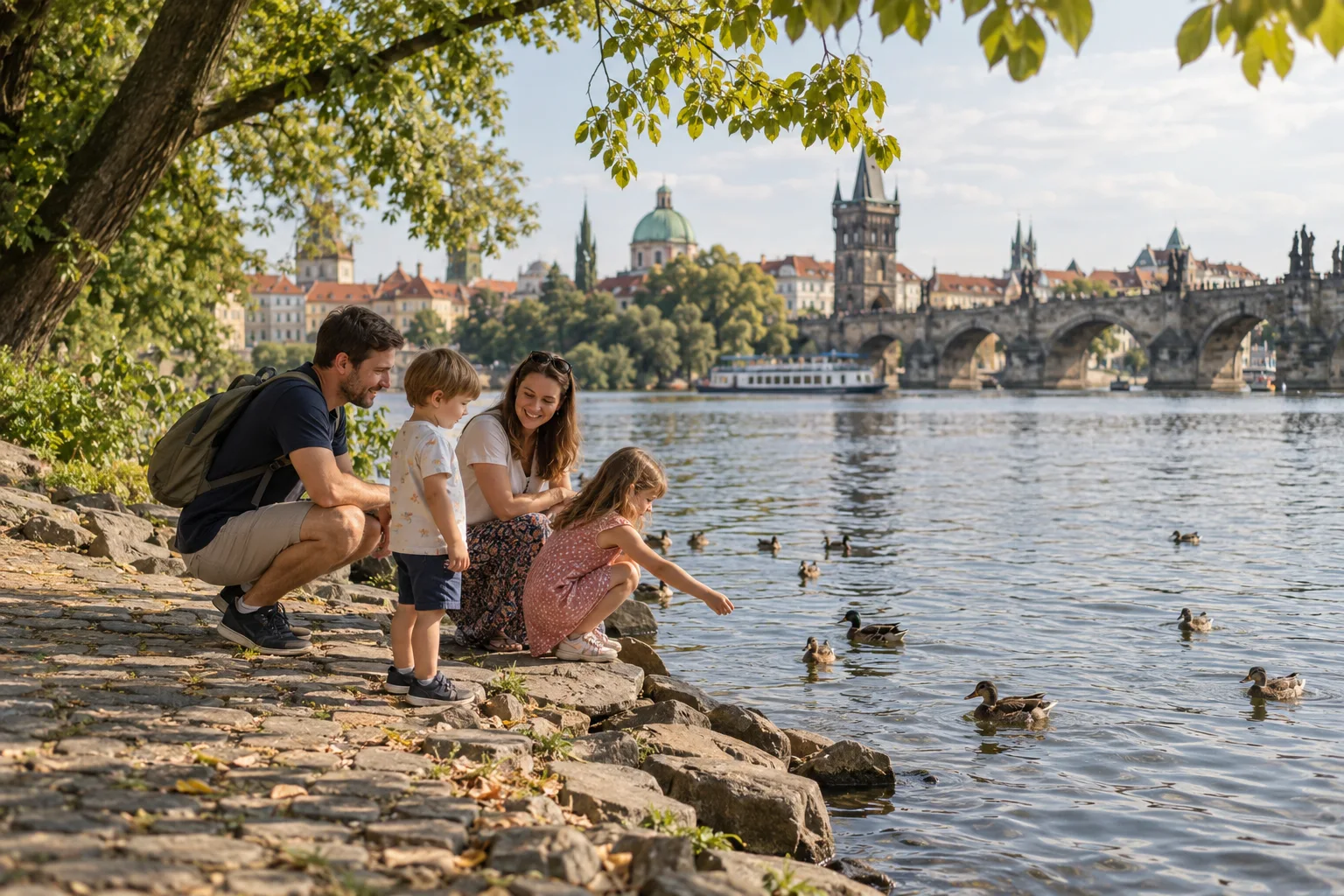
A family trip to Prague does not have to be an abbreviated version of an adult site list. Choose one place each day that intrigues the children, one walking area and a break that can be extended. This creates a route that can be changed without losing an order after an order.
Start the morning with family.
Before selecting the attraction, write down when everyone is ready to exit and what length of activity is convenient for them. If the morning starts late, do not book an early visit to another side of the city. Divide the day into three parts: a central exit, a meal and rest, and a short addition. The supplement is optional; it is not a debt that needs to be paid.
It is possible to build a morning around a walk in the Old City area, or choose a different day for the area of Male Strana and Kampa. These are proposals for a geographical framework, not a verifiable accessible route. Check the actual road with a stroller, stairs and walking time from the hotel. Don't connect a few areas just because they look close on the city map.
Activities discussed in this guide
For a Prague day with children, choose one main activity: the zoo for a longer outdoor outing or an illusion museum for an indoor city visit. Check child ages, transport and rest breaks. Buying tickets is not a reason to squeeze both into one day.
Affiliate links: we may earn a commission at no extra cost to you. Booking and payment take place on Viator. Check dates, terms and the final total.
Turning walking into a small task
Instead of requiring children to be interested in each building, choose a simple game: find three shapes on the front, draw a detail they liked, or choose a spot for family photography. Define where the game ends and where you stop. You don't need an app or an activity to give a walk a purpose.
| Part of the day | The main program | Alternative in case of fatigue |
|---|---|---|
| Morning | One visit or walk in one area | A short route around the lodging place |
| Noon | Planned meal and rest | Return to the room if practical |
| Afternoon | Short Activities for Children's Choice | Free time without invitation |
Before buying tickets
Check minimum age or age recommendation, visit duration, exit and return option, and cancellation conditions. A price for a child does not teach that the activity is suitable for your child. If two children want different activities, it is possible to schedule a short time each or split up with an adult for each group, depending on the composition of the family.
Put only what you need in the bag on the way and keep an accommodation address available to any adult. Set a clear meeting point before splitting up. The budget table also lists food and transportation, not just entry tickets. Prepare the amount for the whole family using The budget planner.
A brief evening check.
At the end of the day they asked what they wanted to continue and what was too long. Change the next day accordingly. If one activity was successful, you can go back to that kind of experience instead of always looking for something new. The municipal skeleton can be taken fromPrague route for three days Choose only what is right for you.
A day that succeeds even when one of the children needs a break
Each morning, choose one action that the children are waiting for, and explain what will happen before and after. A short, clear sequence is easier to understand than a long list of sites. You can let the child choose the food stop or point of photography from two options that you already know fit to the track.
Prepare a short walk point: a place where you can decide to return, without canceling an important invitation. If planning a cart, check the specific way instead of relying only on distance. Even when the route is possible, leave time for a stop and not just for arrival.
At the end of the day, document what worked: a short activity, a long break, or a choice of the children. Use the information to change tomorrow. You don't have to add another attraction to make up for a place you haven't come to. Sometimes a return to the type of activity we enjoy will give more value than a new experience that burdens everyone.
Example scenario: Check the selection before committing
A family leaves for the morning in the Old City and finds that the walk gets tired earlier than expected. If a shortcut point is set, you can sit down and finish it without feeling like a failure. Check what is left of the day after the break and only then decide whether to continue. This is a design example, not a verifiable walking path.
Work Questions and Practical Answers
| Decision Point | What to ask | How to Advance |
|---|---|---|
| A choice for children | What small decision can they make out of suitable options? | Give two options that have already been tested instead of an open question about the whole city. Thus the child can choose the truth without deciding on something impractical. |
| Shortpoint | Where can you end the walk without disrupting the rest of the day? | Choose a place where you can stop and return. Explain that the addition to walking depends on energy and is not a commitment that should be met in any situation. |
| Learning from Today | What would you like to do again because it has worked well for the family? | At the end of the day, write down one thing the children asked to continue. This is useful information for the next morning, even if it does not belong to the original list of sites. |
| Practical pause. | Is there time for a stop and not just a crossing between stations? | Add a window that can be extended to food or rest. A planned break makes it easier to assume that an option will always be found at the moment when you get tired. |
Applying to your program
Choose a real day out of the trip and write down the decision at hand, the alternative and the detail still missing from the decision. Use the questions and answers on the table to find out. Don't turn unaccepted information into fact just to complete the program.
After the clarification, we also updated the actions surrounding the decision: through arrival, meal, free time or additional expense as applicable. Keep the version next to the bookings and make sure it still matches the dates and composition of the passengers. The plan can change; the important thing is to know what has changed and what decisions are affected by it.