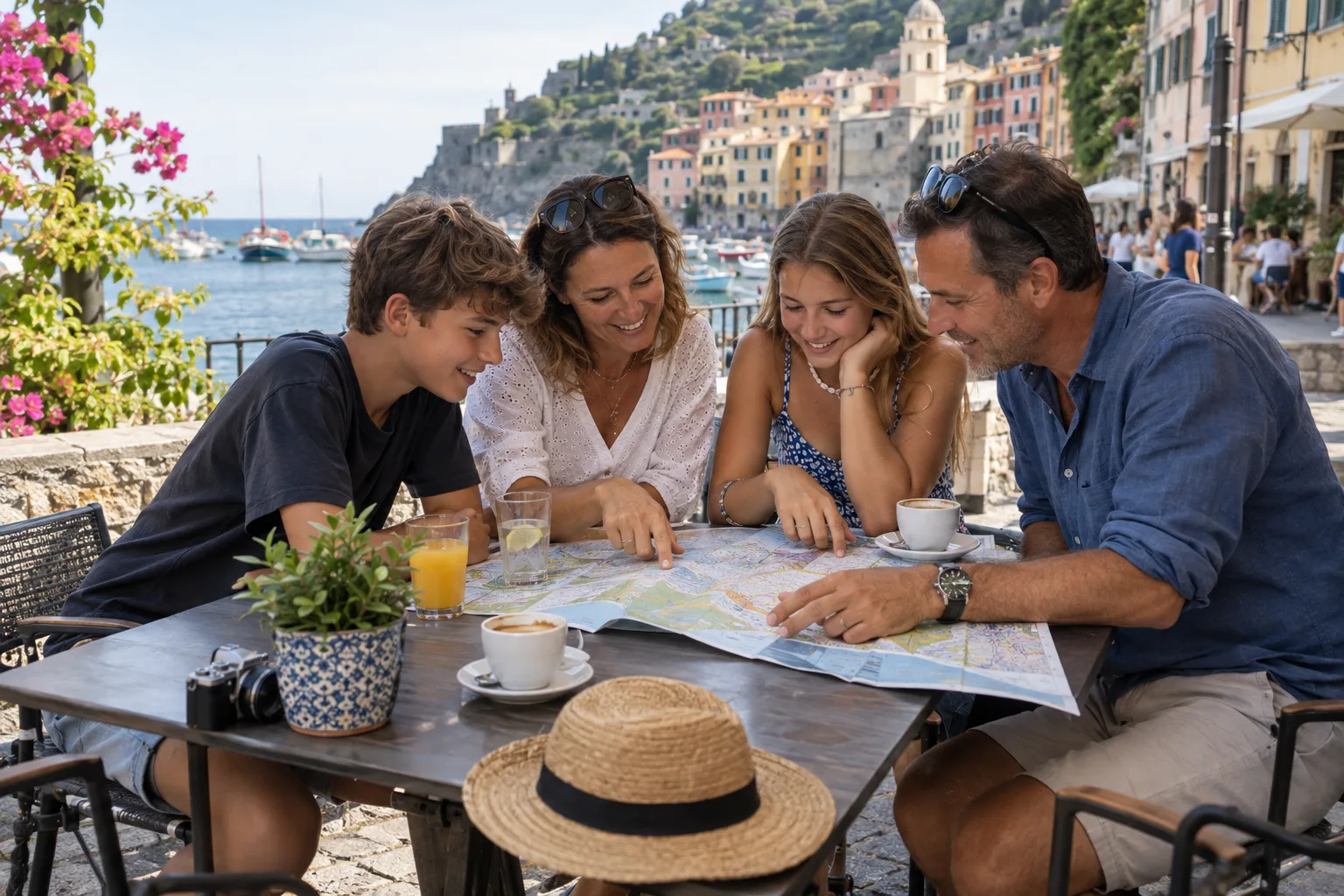
Planning a vacation with teenagers is easy to fill the day with attractions that seem age-appropriate. The difficulty is figuring out what interests the particular people who are traveling with you. One wants football, another wants photography, and someone mostly wants time to walk around without a plan. A good route starts with a short conversation before booking tickets, and gives these preferences a place to see in the diary.
Ask each passenger to choose one thing they really want, one thing that intrigues them and one thing they prefer not to do. Parents also participate. Don't guarantee that every request will be fulfilled; set a budget in advance for activities and a reasonable travel duration for you. Thus one can choose between real options, without arguing over an idea that turned out too late as expensive or far away.
Three types of time in one day
A convenient planning proposal is to combine a central activity, a common selection time and an open window. The main activity can be a place that requires an invitation. The selection time is a decision between two or three close options. The open window remains uncommitted: an interesting store, a cafe, a park or an early return to the hotel. These are possible design components, not a formula that needs to be filled every day.
| Part of the day | Example of Planning | Who makes a decision |
|---|---|---|
| Morning | A pre-ordered visit according to a passenger matter | Choose together before the trip |
| Noon | Dining and strolling in the visiting area | One adult offers two options. |
| Afternoon | Short activity or rest | Decide by the energy that day. |
| Evening | Planned departure or free evening | Pre-coordinate expectations |
London can serve as an example of diversity, without dictating a destination. Its official tourism guide presents adolescents with options in sports, culture, observation and other activities. Instead of sending a long list, choose from it several types of experience and ask passengers to rate interest.
A firm order only when it has a reason
Separate between places that require an invitation and places that can be left to choose from. Free activity can also require a ticket: the Science Museum in London requests a free entry ticket in advance, posting closings and point changes. Testing the operator is also important when the activity does not require a budget.
Give the teenager a definite choice: compare two stadium tours, find a place for lunch near the museum or choose a photo area. A frame of "up to a certain amount, in this area and on this day" is more useful than "looking for something to do." His decision should actually go into orbit, otherwise it is difficult to expect a partnership to follow.
If the family wants to split up, decide in advance what is appropriate for the ages, for familiarity with the destination and the rules of the place. You can also split into two groups with an adult in each group. Set a clear meeting point and time, and make sure each group has the address and cards they need. An independent choice does not have to be an independent stroll through the city.
We also planned what happens when someone doesn't want to join a certain activity. Is it possible to choose something close, shorten the visit or replace it? Such a conversation before the trip allows setting boundaries without turning any change into a disappointment. When pre-booking paid activity, make sure passengers understand that it is a shared commitment. When there is no invitation, leave a real place to change direction, even if you yourself have been waiting for this place.
Towards the end of each day, devote a few minutes to tomorrow: what remains constant, what can be shortened and what everyone wants to replace. If one activity has been particularly successful, it can be given more space. If everyone is tired, there is no need to add a visit because it appeared on the list. A successful vacation with adolescents can include both a museum and a quiet time, as the pace and choices feel shared.
Giving responsibilities that have a real place in the program
To engage adolescents, give them a defined area rather than an overly open task. You can choose a meal in a specific area, compare two activities or make a photo stop. Provide the time and budget limit in advance. After a suitable offer has been received, put it on track and let the person who chose to explain to the group why they are interested in it.
Differentiate between screen time designed to organize and free time. A phone can be used for maps, cards, and photography, so a sweeping rule can also make it difficult to manage today. Agree on shared moments where you want to be present and on windows where everyone is resting in their own way. It's a family decision, not a measure of vacation success.
Before ordering hard, ask all participants to explain what the activity includes and how long it is expected to occupy. Thus, one can discover a gap between one who imagines a short visit and one who expects half a day. If the matter is not shared, check for an alternative that is suitable for a planned composition or split according to the ages and rules you have set.
Leave room for a change of heart without turning every day into a negotiation. It can be determined that one anchor remains fixed and the rest is tested the night before. When someone proposes to cancel, ask for a practical alternative in the same area and within the set framework. Thus the choice comes with responsibility for the joint plan.
Activities discussed in this guide
Let teenagers choose an activity that fits the destination: an illusion museum in Prague or a cruise in Rhodes. For a cruise, check participation and swimming requirements; for the museum, check opening times and the time needed for a visit.
Affiliate links: we may earn a commission at no extra cost to you. Booking and payment take place on Viator. Check dates, terms and the final total.
Example scenario: Check the selection before committing
A teenager wants a shopping area and the parents want a museum. Instead of adding both to an already full day, the family chooses an area where one can combine a defined visit and selection time. Determine in advance how much time per part and what to do if you get tired. It is not necessary for every activity to be equally loved by everyone, but it is important that everyone sees that their preference has taken a real place.
Work Questions and Practical Answers
| Decision Point | What to ask | How to Advance |
|---|---|---|
| Defined Responsibility | What decision does the adolescent make and in what time frame and budget? | Set up an area, time, and budget before you start searching. When the proposal fits the frame, give it a real place in the day and not just in the list of ideas. |
| Expectations from the activity | Does everyone understand the duration of the visit and what it does? | Ask to describe in words the visit and its duration before payment. A gap in expectations is easier to resolve in a conversation at home than after the family has already entered into action. |
| Consensual flexibility | What is fixed in the day and what can be replaced in the evening before? | Select one fixed anchor and keep the remaining options as flexible as conditions allow. Thus there is a framework for the day and also a place to respond to what works for the group. |
| Practical Alternative | What do you suggest instead of an activity you want to remove from the program? | A change is accompanied by an alternative proposal that is suitable for the region and the framework. The responsibility of finding a solution helps to make personal preference part of joint planning and not just an argument. |
A worksheet for purchase suitable for your use
Before adding a product to an order, write down what action it should help and what days you will use it. Then write down what you already have and what is included in another product purchased. This step prevents duplication and clarifies whether you need a new solution or just an organization of the existing things.
Compare two options according to the same usage. Specify the number of relevant passengers or devices, the period of use, and the limitations you have read in the offer. Don't give an automatic advantage to the larger package; check which additional component will really change the day. If the advantage is convenience and not saving money, you can choose it, but it is worth writing it explicitly.
Choose one reasonable change in the plan and think about how it affects the purchase: an activity that cancels, a split of the group or a need that grows. Check the course of action according to the product conditions, without assuming that it is possible to return, expand or transfer it to another. Keep the certificate and instructions of use in an accessible place. Thus the product remains a tool that serves the trip, rather than a commitment that changes the entire vacation.